 Printing Tips
 PDF Note
CONGRATULATIONS Anne
You Got a Perfect Score on the Kolbe A™ Index!
You are fantastic at making comparisons, documenting information, and defining priorities. You can be counted on to research historical details, become an expert in areas of special interest, and make strategic decisions.
Kolbe Action Modes®

How do we know this? You told us when you completed the Kolbe A™ Index which revealed your 4-number MO (Mode of Operation).
 Hear Kathy Kolbe describe your strengths at kolbe.com/login
Anne Shick





Kolbe Action Modes are behaviors driven by your striving instincts.
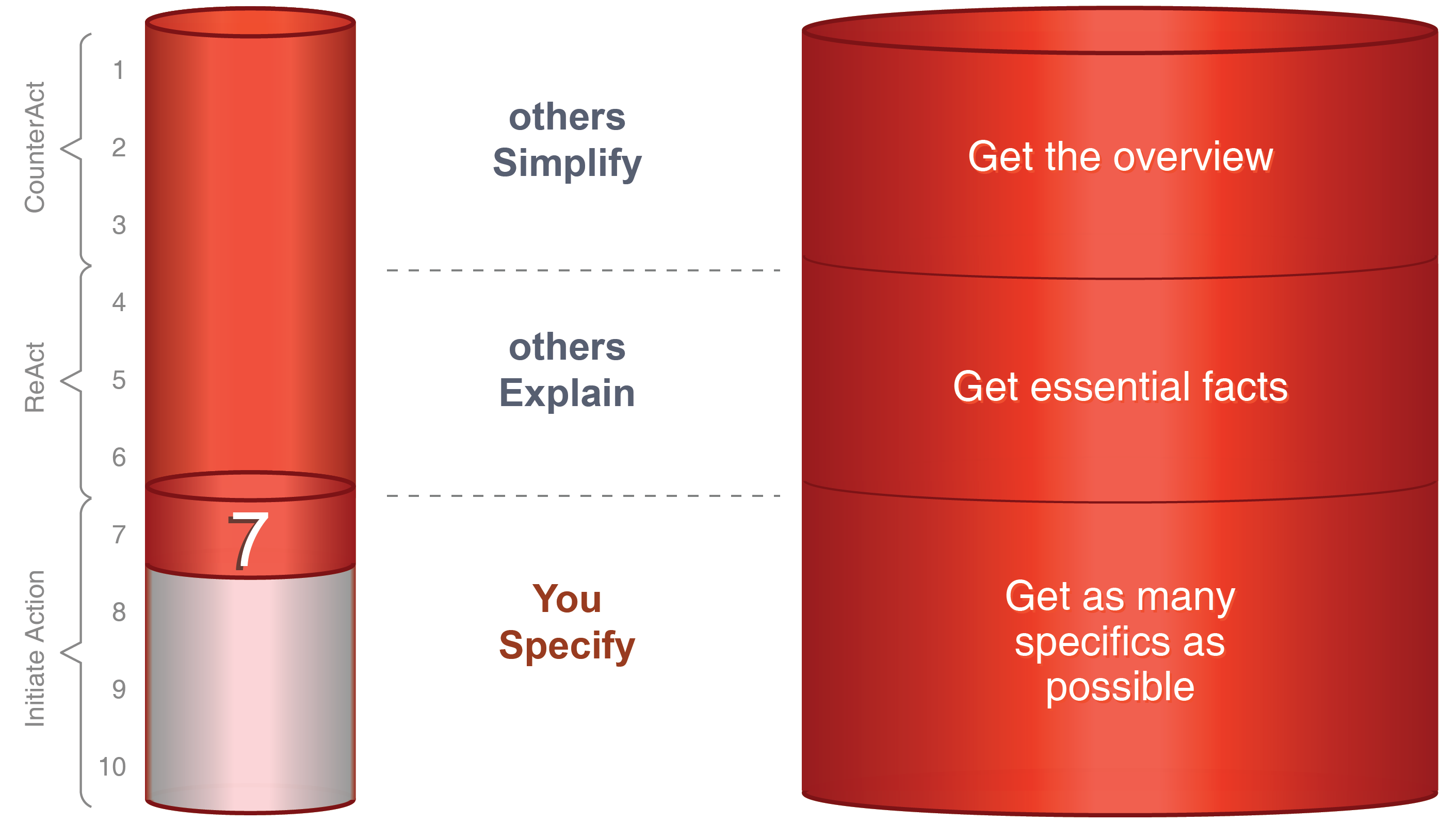
Fact Finder: How you gather and share information.
Your way of doing it is to Specify.
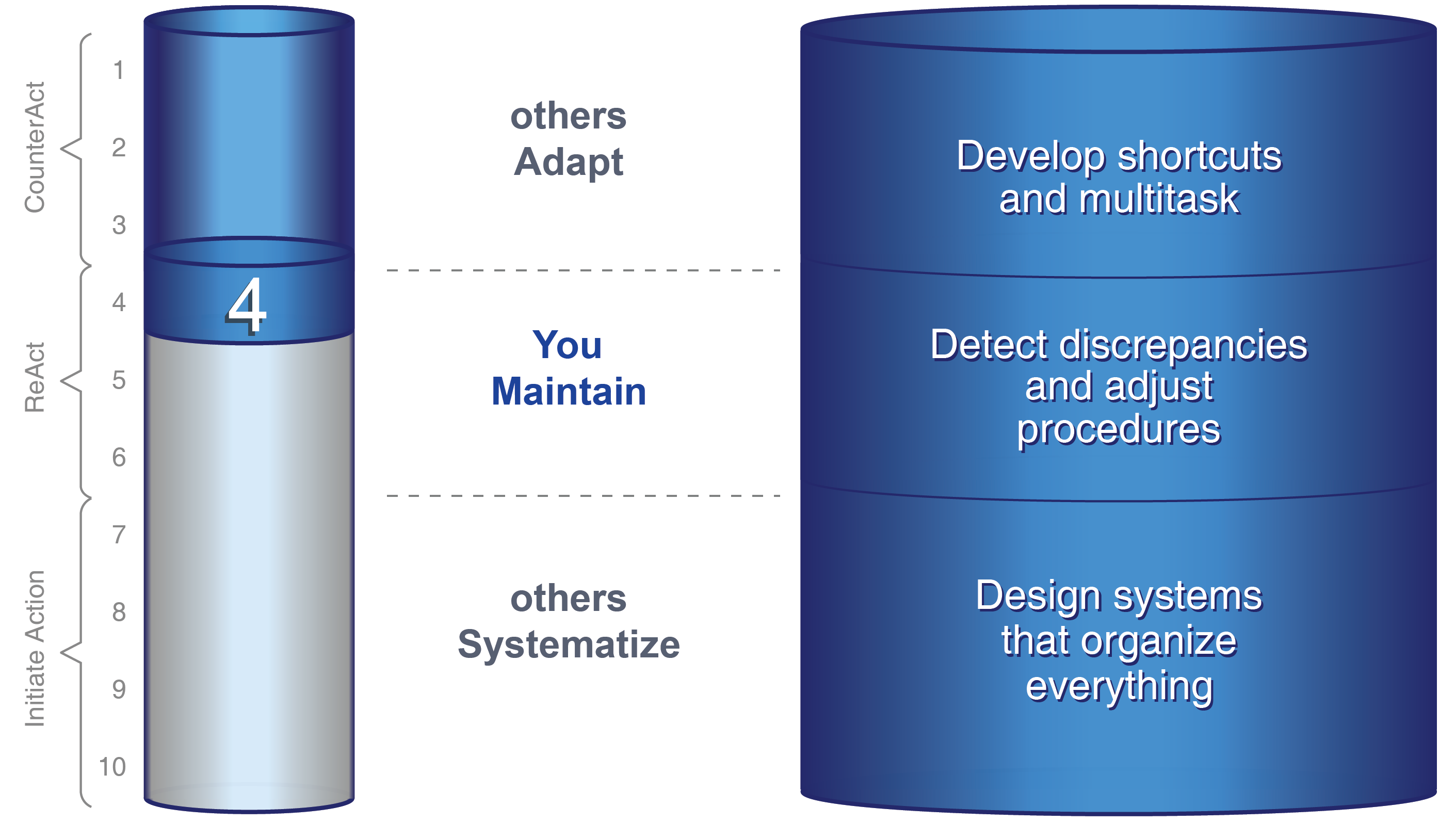
Follow Thru: How you organize.
Your way of doing it is to Maintain.
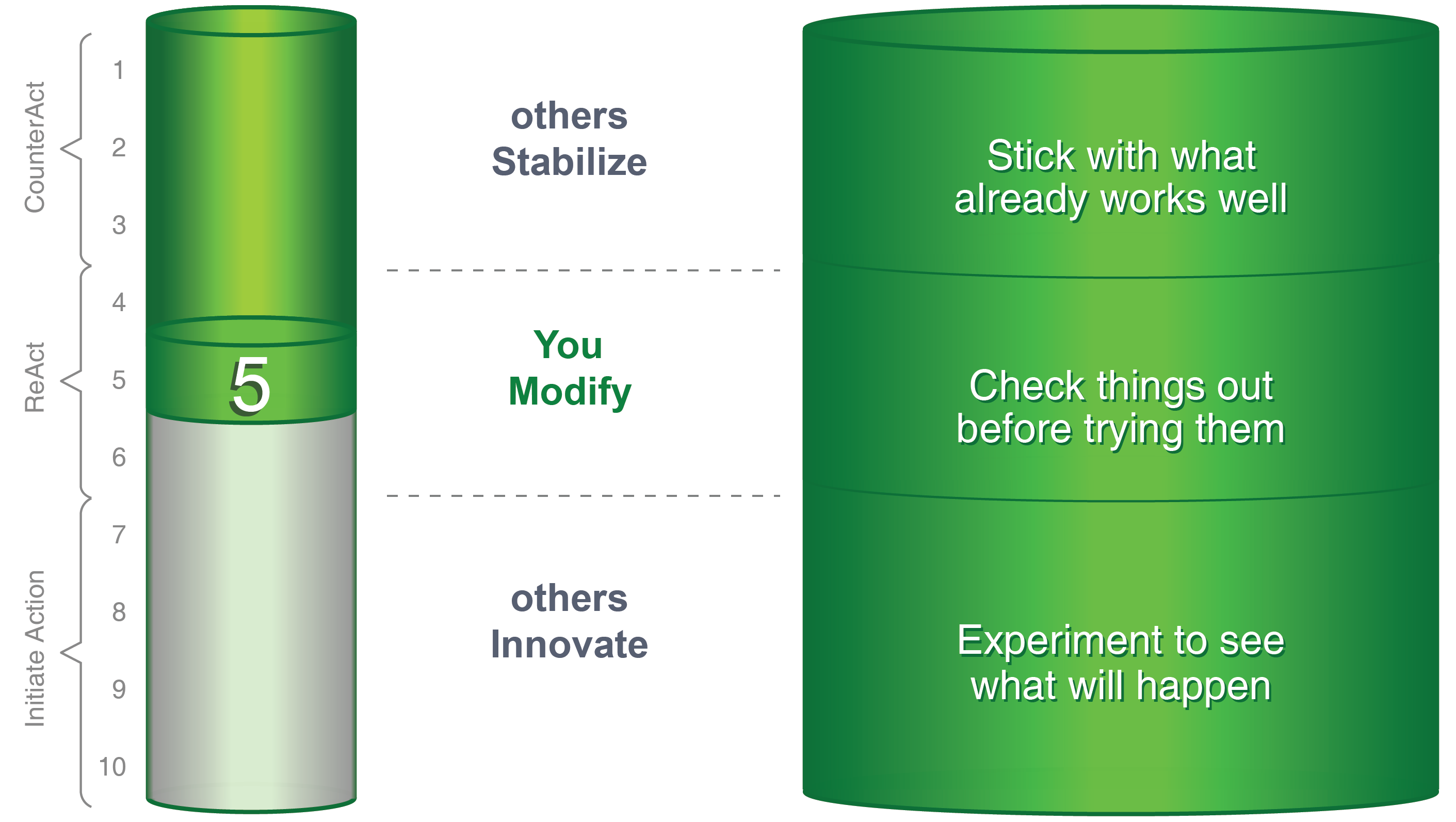
Quick Start: How you deal with risk and uncertainty.
Your way of doing it is to Modify.
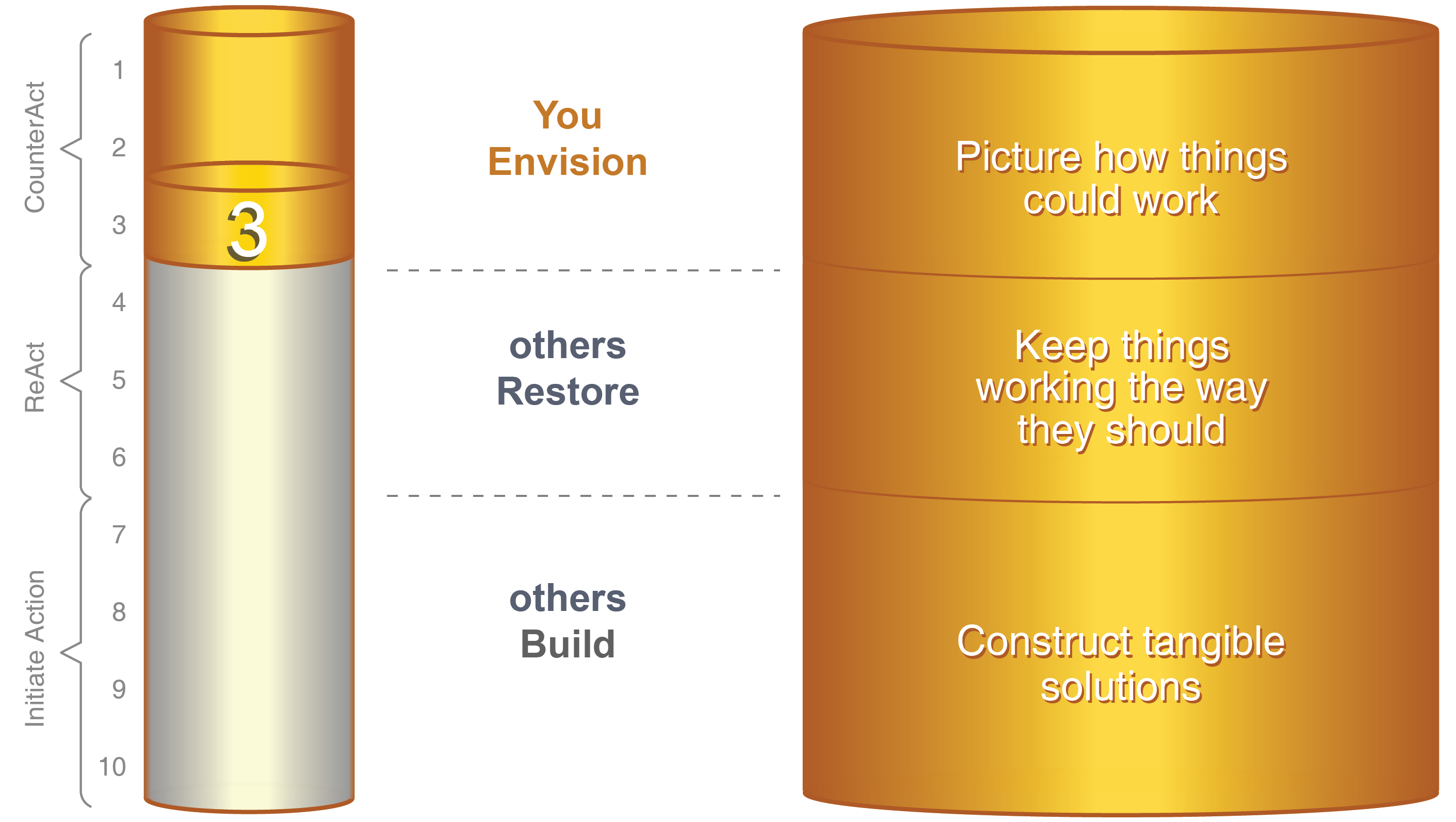
Implementor: How you handle space and tangibles.
Your way of doing it is to Envision.
You can count on your Kolbe result being constant over time.
What's so different about the Kolbe Index?
Your Kolbe result doesn’t have anything to do with your personality or how smart you are. Kolbe adds a new dimension—the conative. How you take action when you are free to be yourself is one of the most important things to know about yourself. It includes how you will naturally:
- Solve problems
- Make decisions
- Take purposeful action
The conative (doing) part of the mind is defined as: Action derived from instinct; purposeful mode of striving, volition. It is a conscious effort to carry out self-determined acts.
Based on teachings going back to Plato and Aristotle, conative is one of three parts of the mind.
These three parts of the mind work together to form your greatest contributions to the world.
Conables® Tips
Without an understanding of the power of conation, you may have learned ways of taking action that won't work well for you. Look for Conables Tips throughout your Kolbe A result. Individualized for you, they will help you Do More, More Naturally and achieve what matters to you most.
Kolbe Strengths
You have a natural strength in each Action Mode that helps you make better decisions.
| Action Modes | ||
Fact Finder
|
Your best way of gathering and sharing information is to Specify. | |
|
For instance, you might: Research in-depth Justify decisions Uphold precedent Define objectives Assess probabilities |
Define terms with exactness Establish specific priorities Provide historical evidence Create analogies Develop complex strategies |
|
Follow Thru
|
Your best way of organizing is to Maintain. | |
|
For instance, you might: Sustain systems Follow processes Adjust procedures Reorder steps Coordinate schedules |
Accommodate structure Reduce redundancies Identify inconsistencies Meet the need for closure Maintain order |
|
Quick Start
|
Your best way of dealing with risk and uncertainty is to Modify. | |
|
For instance, you might: Support experiments Respond to challenges Try out new ideas Sustain innovations Navigate uncertainty |
Accommodate urgency Adjust deadlines Mitigate risks Mediate between the vision and the given Facilitate new initiatives |
|
Implementor
|
Your best way of tackling space and tangibles is to Envision. | |
|
For instance, you might: Prevent overbuilt solutions Imagine outcomes Use preassembled products Portray conceptually Reduce manual effort |
Use intangible methods Make temporary fixes Deal with the abstract Envision circumstances Describe without having to demonstrate |
|
Fact Finder: How you gather and share information
Conables® Tips
Gather and share information in a way that works for you:


Follow Thru: How you organize
Conables® Tips
Organize in a way that works for you:
Quick Start: How you deal with risk and uncertainty
Conables® Tips
Deal with risk and uncertainty in a way that works for you:
Implementor: How you handle space and tangibles
Conables® Tips
Handle space and tangibles in a way that works for you:
TIME AND ENERGY
Everyone runs out of time and energy. You can’t get time back – once it’s used, it’s gone – but energy can be renewed.
Your Pyramid of Mental Energy
Your 100 units of conative energy are equal to the energy available to every other human being. Your MO of 7-4-5-3 gives you the same potential power as any CEO or rock star. Turn this potential into greatness by using your available energy according to your strengths.

Pyramid of Energy
Specify
37%
Maintain
21%
Modify
26%
Envision
16%
Conables® Tips
You spend a great amount of time and energy digging into the past. You define, then compare problems and opportunities, assigning priorities to them. Only then do you use your other conative strengths to figure out what comes next.
Don’t let anyone stereotype you as contributing or “being” just one of the Action Modes. Your contribution begins with specifying and continues until you envision the solution.
Self-manage your use of these limited, but renewable, resources. Use them purposefully and they will bring joy to your life.
Your Problem-Solving Sequence
The ideal way for you to use your time is according to your MO of 7-4-5-3. So, forget time management advice that doesn’t take your striving instincts into consideration.
When free to be yourself, you will use your strengths in the following way:

Fact Finder
37%
Quick Start
26%
Follow Thru
21%
Implementor
16%
1. You’ll start the problem-solving process by fact checking and determining practical and appropriate priorities.
2. Next, you adjust to changes.
3. Then, you look for ways to fit the pieces into the system.
4. Finally, Anne, you visualize solutions.
If you work against your strengths, you’ll never have enough time. You will squander it by taking non-productive paths.
Get Conative, Anne!
We can’t give you more time, but we have proven that leveraging your conative strengths can dramatically improve your productivity.
Conables® Tips
Here are some ways you can get the multiplier effect from your MO of 7-4-5-3:
- Commit–but to very little. Target your top priorities. Because you have limited mental energy, determine what deserves your best efforts.
- Avoid getting bogged down in analysis paralysis by digging deeply when it matters most.
- Save energy by not trying to become an expert in everything that interests you.
Get More Done in Less Time
Conables® Tips
A good way to start your day is to zero in on the top priorities and get them done first.
Set priorities and allocate time for the top three or four, making sure you have gathered appropriate resources and background information.
You’re likely to procrastinate if you don’t have a system or format to follow.
Ultimately, you need to avoid spending time on physical tasks – instead, find someone to do it for you.
Self-Provoke to get where you want to go. You’re responsible for goading yourself to initiate necessary action.
You may be working against your grain without even knowing it. When we take action outside of our strengths zone, we are not only unhappy but also unproductive, wasting our time on things that require too much energy. Instead of robbing yourself of your valuable time and energy, modify how you do things so that you can accomplish them in your own way.
Don't just take our word for it; try it! You may surprise yourself with how much you can get done, and by how natural it feels.
Pinpoint Potential Stress
The Kolbe B™ Index measures an individual's perception of their own job responsibilities. Comparing your Kolbe B Index result with your MO (in this Kolbe A Index report) will reveal if and where you may be working against your natural way of doing things.
COMMUNICATION AND RELATIONSHIPS
There are two main factors that drive success when you’re working with others—communication and the interplay between each person's conative strengths.
Anne, Communicate Your Way
Communication is at the heart of every relationship and involves all three parts of the mind. Emotions cause the desire to communicate while thoughts provide the content. However, your conative instincts also drive how it plays out.
We’re taught that there is a “right way” to do things, and often only certain types of communication are valued. If you don’t communicate according to your conative strengths, you are likely to seem inauthentic and may not get the results you seek. Be true to who you are to get your message across effectively without alienating others.

Communication involves all three parts of the mind.
It’s Not Just What You Say, It’s How You Say It
Conables® Tips
“It depends” is your answer in many situations. You’re right, of course. But it can drive people crazy when you don’t seem willing to give them an answer right away. Unless you’re talking to another Initiating Fact Finder, you need to follow “It depends” with a brief example of why, and then your most probable correct answer. You usually make your point better when you put it in writing.
In social relationships, remember most people generalize far more than you do. You can fill in the conversation with more accurate data as long as you aren’t being judgmental in the way you do it.
It would help if you know the Kolbe result of others in your life so you could know with whom to share and how much.
Win-Win Relationships
There is no perfect combination of Kolbe results for relationships. You can improve both personal and professional relationships by understanding how everyone’s conative strengths interact.
Collaborating with others can be challenging, whether you have similar or differing instinctive strengths. You need to act according to your instincts while allowing others to act according to theirs.
Conables® Tips
In situations with a person who has very different conative strengths than you do, you can benefit from the resulting diversity of strengths, but those differences could cause conflict and frustration.
- For you, togetherness may mean doing different things in the same room.
- Don’t expect the other person to work toward shared goals the same way you do.
Conables® Tips
In situations with someone who has similar strengths, you might be able to finish each other’s sentences, but you could struggle to make forward progress.
- Find people with different approaches to fill some of the gaps to avoid getting stuck.
- Avoid competing with one another by tackling different tasks while working toward shared goals.
Summary and Share
Anne, the information in every section of this report was individualized for you, whether you remember it by:


However you visualize your MO, it's important to keep your conative strengths in mind as you make life-empowering decisions.
You have many strengths that could contribute to your career, family, or community.
Now that you know the power of your MO, it's up to you to use it for good purposes.
The world needs your conative strengths!
Worksheet
Refer to your Kolbe A Result and answer the following questions.