Kolbe A Result
You are viewing the Kolbe A Online Result. There is an optimized version for printing available. You will find it via the  icon located at the top right of the online version.
You are viewing the Kolbe A Online Result. There is an optimized version for printing available. You will find it via the icon located at the top right of the online version.
Congratulations! You just got your Kolbe A™ Index result and are on the way to discovering what makes you - YOU.
Ready to apply your results to your daily life?
Enroll in the Activate Your A™ Discovery Course for the answers you seek.
 Share Your Result
Now that you know the power of your MO, it's up to you to use it for good purposes.
If scripting is being blocked by your browser, you can simply copy the link...
https://e.kolbe.com/rv/?rt=spkas&st=K2-042C9DC0-CDF5-E811-90EC-000C29CEDCB0
You Got a Perfect Score on the Kolbe A™ Index!
You have an uncanny talent for coming up with unique strategies, prioritizing opportunities, and dealing with the unknowns in complex problems. You thrive when quantifying an opportunity and prospecting for ways to enhance it.
How do we know this? You told us when you completed the Kolbe A™ Index which revealed your 4-number MO (Mode of Operation).
 Kathy Kolbe ...
The Kolbe A™ Index is an instrument designed to help you focus on your strengths on how you do things when you're free to do them your own way. When you're in the zone, in that glide pattern, when you're able to do what you do best, when you are striving, what do you most or least do? One of the purposes of the Kolbe is to focus on what you do well and just show everybody that you have equal conative abilities that everyone is somewhere on this continuums in the 4 Action Modes. Wherever you are is just fine for you, is just great because there's no good or bad, right or wrong. Who you are is who you were meant to be and the Kolbe Index is validating and celebrating the strengths that you can use in decision making, that are naturally there for you and will always be there for you. These are positives about you.
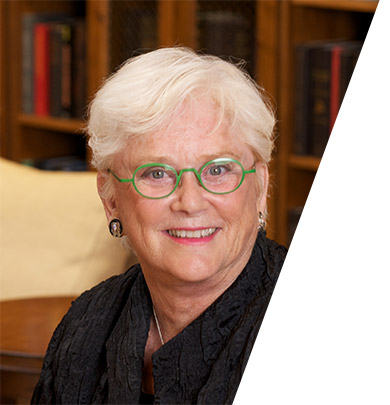
Kathy Kolbe is the world's leading authority on human instincts and author of the Kolbe A™ Index. She solved the riddle of how all people can be both equal and different in their creative efforts by identifying the nature of universal instincts that constitute individual modus operandi.
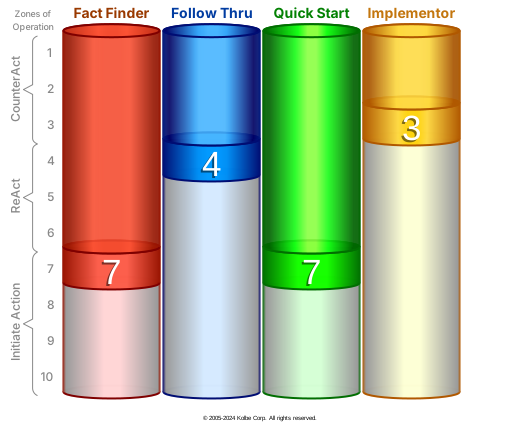








Kolbe Action Modes are behaviors driven by your striving instincts.
* Kathy Kolbe discovered the instinctive Action Modes and authored the Kolbe A™ Index
Kathy Kolbe ...MO is shorthand for modus operandi, or mode of operation. Kolbe has 4 modes, so we could say modes of operation, but to summarize - it is your innate pattern of taking action, the behaviors that you will use in any situation, any day, any time, as long as you are striving, and as long as you are working toward either a decision or some kind of action in the creative problem solving process.
Your MO doesn't come into effect when you're relaxed or doing recreational things. At that time you're not striving, but anytime you are, your modus operandi - your MO - that pattern of action, will be in place.
An Action Mode is a cluster of behaviors that are derived from instinct. In a sense instinct is a subconscious force. We can't measure that, but we can measure the actions that we can see, observe, and report. There's a continuum of behaviors in each of the Action Modes. No matter where you are in that continuum, it is equal in strength. To help you summarize where you are, we've given you the number from 1 to 10.
Kathy Kolbe is the world's leading authority on human instincts and author of the Kolbe A™ Index. She solved the riddle of how all people can be both equal and different in their creative efforts by identifying the nature of universal instincts that constitute individual modus operandi.
How you gather and share information.
How you organize.
How you deal with risk and uncertainty.
How you handle space and tangibles.


How you gather and share information.
How you organize.
How you deal with risk and uncertainty.
How you handle space and tangibles.
You can count on your Kolbe result being constant over time.
Kathy Kolbe ...People have a sense of how smart they are, how good they are in different kinds of skills. You knew when you were put in the “Red Bird” reading group or the “Blue Bird” reading group where you kind of fit in on the bell-shaped curve in the cognitive and emotionally and affectively, you know whether you're an introvert or extrovert. There are instruments that will help identify that for you. Kolbe is different. It doesn't deal with either your IQ, or your social style, or personality. It is the only validated instrument that has proven absolutely reliable in predicting your actions, how you will do things, how you get things done best. I can predict what works for you and what doesn't. I say can because you're the one that completes it. This is important because this is the one part of you that is unchanging. This is the one thing you can count on. It's the core of your being, it's essence of you. It's not going to change.
Kathy Kolbe is the world's leading authority on human instincts and author of the Kolbe A™ Index. She solved the riddle of how all people can be both equal and different in their creative efforts by identifying the nature of universal instincts that constitute individual modus operandi.
Your Kolbe result doesn’t have anything to do with your personality or how smart you are. Kolbe adds a new dimension—the conative. How you take action when you are free to be yourself is one of the most important things to know about yourself. It includes how you will naturally:
The conative (doing) part of the mind is defined as: Action derived from instinct; purposeful mode of striving, volition. It is a conscious effort to carry out self-determined acts.
Based on teachings going back to Plato and Aristotle, conative is one of three parts of the mind.
Three Parts of the Mind |
||
Cognitive
|
Affective
|
Conative
|
These three parts of the mind work together to form your greatest contributions to the world.
Without an understanding of the power of conation, you may have learned ways of taking action that won't work well for you. Look for Conables Tips throughout your Kolbe A result. Individualized for you, they will help you Do More, More Naturally and achieve what matters to you most.
Kathy Kolbe ...Fact Finder is a Kolbe Action Mode. It's the term for how you deal with gathering information. There's a continuum in Fact Finder from doing things in a very simple overview way to a very complex specific way. At one end, the 1, 2, 3, level of Fact Finder, you generalize. At the other end, up to the 10, is how you become an authority or an expert.
You have a wonderful knack for being able to gather information very specifically, and that continuum in the Fact Finder mode, what you do naturally, is give the most comprehensive information that you'll find in any group. You're one of those people who is on the end of the continuum where justifying the data is just part of your game; it's what you do. Putting it into very elaborate strategies where what you've done is weighed the pros and cons, looked at things in a lot of detail to be sure that what you have is so thorough, so precise, and so on track in terms of the research having been done.
Kathy Kolbe is the world's leading authority on human instincts and author of the Kolbe A™ Index. She solved the riddle of how all people can be both equal and different in their creative efforts by identifying the nature of universal instincts that constitute individual modus operandi.
Do |
 |
Don't |
 |

For instance, you might:

Do |
|
Don't |
|
Kathy Kolbe ...Follow Thru is a Kolbe Action Mode. It's a term we use for the method of taking action that deals with organizing, storing and sorting information. At the low number end of Follow Thru, it's an ability to be highly adaptive and multi-task. At the high end, it's being very, very systematic where you put things into sequence and build in a lot of structure. It ranges from chaos to highly organized or sequential.
I am so glad there are people like you in the world who can maintain structures; who are able to rearrange information and who are able to store it and actually retrieve it. On this continuum in Follow Thru, you are the bridge. You're the middle person who can interpret the procedures to other people. You are so good at being able to make your own decisions, because you will maintain a sense of orderliness. You will put things into a structure or a sequence when necessary. Keep in mind, you can structure and classify but you can also change that system as needed and as necessary. Give yourself not only permission to do that, but celebrate this absolutely wonderful ability.
Kathy Kolbe is the world's leading authority on human instincts and author of the Kolbe A™ Index. She solved the riddle of how all people can be both equal and different in their creative efforts by identifying the nature of universal instincts that constitute individual modus operandi.
Do |
|
Don't |
|

For instance, you might:

Do |
|
Don't |
|

 Kathy Kolbe ...
Quick Start is the Kolbe Action Mode that deals with risk and unknowns. We all have to take risks. We all have to deal with unknowns. At the 1-2-3 level in Quick Start is where you bring stability, where you deal with what is known, and you try to manage risk so there are as few unknowns and as little risk at possible. At the high number end in Quick Start is how you innovate or improvise, or just take a risk without having to know what the outcome will be.
You're the go-to person when it comes to taking risks. This Quick Start continuum is a fun one to watch in a group, in a family, in any place where you are. You're at the end of the continuum where they're going to turn to you say and well, what do you think we should do? What's next? Do you have any ideas, and yes you do. You're there, ready, able, and willing to come up with alternatives with other ways of doing it. Taking chances, beating the clock, taking on challenges, and the way you do this is so innate, so natural that you don't even have a sense that other people don't do that, but look at where you are in the continuum. Look how many people are at the other ends of the continuum, and in the middle, and they sometimes have difficulty keeping up with you. They're not always sure where you're headed, because you don't know. You're experimenting. You're exploring, you're trying it on and seeing what's going to happen. It's really important for you not to try to justify or explain your ideas in advance. Just go for it.
Kathy Kolbe is the world's leading authority on human instincts and author of the Kolbe A™ Index. She solved the riddle of how all people can be both equal and different in their creative efforts by identifying the nature of universal instincts that constitute individual modus operandi.
Do |
|
Don't |
|

For instance, you might:

Do |
|
Don't |
|
Kathy Kolbe ...Implementor is the Kolbe Action Mode through which we deal with the instinct to handle things, literally. It's a scale from the abstract to the concrete. At the 1, 2, 3 level, you imagine results. You don't have to touch and feel them, you just are able to look at them from inside your head or from a distance, or hear on the phone what's happening. At the other end, it's very concrete. You need to touch it, actually interact with it, deal with the 3 dimensional aspect of it, to build it, to be very concrete, to construct.
You don't have to touch and feel things to know they're there or to know what's happening. That doesn't mean that you don't have a sense of the environment around you - but it's a sense of it, and not hands on it, in the three dimensional where you have to touch it.
Kathy Kolbe is the world's leading authority on human instincts and author of the Kolbe A™ Index. She solved the riddle of how all people can be both equal and different in their creative efforts by identifying the nature of universal instincts that constitute individual modus operandi.
Do |
|
Don't |
|

For instance, you might:

Do |
|
Don't |
|
Everyone runs out of time and energy. You can’t get time back – once it’s used, it’s gone – but energy can be renewed.
Your 100 units of conative energy are equal to the energy available to every other human being. Your MO of 7-4-7-3 gives you the same potential power as any CEO or rock star. Turn this potential into greatness by using your available energy according to your strengths.

Pyramid of Energy
Specify
33%
Maintain
19%
Innovate
33%
Envision
15%
You lead with background information, making sure it helps promote future possibilities. You also use your Fact Finder strengths to justify the Quick Start need for urgency. This sets you up for using all your conative strengths to make unconventional, yet practical decisions.
Don’t let anyone stereotype you as contributing or “being” just one of the Action Modes. Your contribution begins with specifying and continues until you envision the solution.
Self-manage your use of these limited, but renewable, resources. Use them purposefully and they will bring joy to your life.
The ideal way for you to use your time is according to your MO of 7-4-7-3. So, forget time management advice that doesn’t take your striving instincts into consideration.
When free to be yourself, you will use your strengths in the following way:

Fact Finder
33%
Quick Start
33%
Follow Thru
19%
Implementor
15%
1. You’ll start the problem-solving process by fact checking and determining practical and appropriate priorities.
2. Next, you brainstorm.
3. Then, you look for ways to fit the pieces into the system.
4. Finally, Andrew, you visualize solutions.
If you work against your strengths, you’ll never have enough time. You will squander it by taking non-productive paths.
We can’t give you more time, but we have proven that leveraging your conative strengths can dramatically improve your productivity.
Here are some ways you can get the multiplier effect from your MO of 7-4-7-3:
A good way to start your day is to zero in on the top priorities and get them done first.
Set priorities and allocate time for the top three or four, making sure you have gathered appropriate resources and background information.
You’re likely to procrastinate if you don’t have a system or format to follow.
Ultimately, you need to avoid spending time on physical tasks – instead, find someone to do it for you.
Self-Provoke to get where you want to go. You’re responsible for goading yourself to initiate necessary action.
You may be working against your grain without even knowing it. When we take action outside of our strengths zone, we are not only unhappy but also unproductive, wasting our time on things that require too much energy. Instead of robbing yourself of your valuable time and energy, modify how you do things so that you can accomplish them in your own way.
Don't just take our word for it; try it! You may surprise yourself with how much you can get done, and by how natural it feels.
The Kolbe B™ Index measures an individual's perception of their own job responsibilities. Comparing your Kolbe B Index result with your MO (in this Kolbe A Index report) will reveal if and where you may be working against your natural way of doing things.
Join us for our most popular next step: a results-driven course, designed to deepen your understanding of your instinctive strengths and use them to improve your life.
There are two main factors that drive success when you’re working with others—communication and the interplay between each person's conative strengths.
Communication is at the heart of every relationship and involves all three parts of the mind. Emotions cause the desire to communicate while thoughts provide the content. However, your conative instincts also drive how it plays out.
We’re taught that there is a “right way” to do things, and often only certain types of communication are valued. If you don’t communicate according to your conative strengths, you are likely to seem inauthentic and may not get the results you seek. Be true to who you are to get your message across effectively without alienating others.

Communication involves all three parts of the mind.
You can be so good at convincing people of your point of view that they buy your argument, but later have buyer’s remorse. Avoid the boomerang effect by championing shared causes. Your combination of strengths is like a boxer’s one – two punch: First, you give others substantial written evidence; and second, you give the oral arguments targeting benefits.
It’s best if you consider the end-game before you get in the ring. Knowing the conative strengths of the people you’re dealing with will help you know who will be the best sparring partners and with whom not to get in the ring.
There is no perfect combination of Kolbe results for relationships. You can improve both personal and professional relationships by understanding how everyone’s conative strengths interact.
Collaborating with others can be challenging, whether you have similar or differing instinctive strengths. You need to act according to your instincts while allowing others to act according to theirs.
In situations with a person who has very different conative strengths than you do, you can benefit from the resulting diversity of strengths, but those differences could cause conflict and frustration.
In situations with someone who has similar strengths, you might be able to finish each other’s sentences, but you could struggle to make forward progress.
Andrew, the information in every section of this report was individualized for you, whether you remember it by:
Your iconic Kolbe bar chart |
 |
Your four numbers |
7 4 7 3 |
Your four conative strengths |
Specify Maintain Innovate Envision |
Your use of time |

|
Your use of energy |

|
However you visualize your MO, it's important to keep your conative strengths in mind as you make life-empowering decisions.
You have many strengths that could contribute to your career, family, or community.
Now that you know the power of your MO, it's up to you to use it for good purposes.
Refer to your Kolbe A Result print version and answer the following questions.
Congratulations! You just got your Kolbe ATM Index result and are on the way to discovering what makes you - YOU.
The next step most people take is to apply their results to improve their lives. Register for our Discovery Course to activate your A today! CLICK TO LEARN MOREKolbe Corp has partnered with Career AdvantageSM to provide a career guidance system that incorporates both conation and interests. Kathy Kolbe developed this program, which has a new algorithm and is sold separately from the Kolbe A Index. Click here to go to CareerAdvantage.com and receive a great discount!
The Kolbe B™ Index measures an individual's perception of their own job responsibilities. Comparing your Kolbe B Index result with your MO (in this Kolbe A Index report) will reveal if and where you may be working against your grain.
 Email Your Result
 Follow Us